The Legend of Nian and Firecrackers
Origin: Ancient China (c. 200 BC)
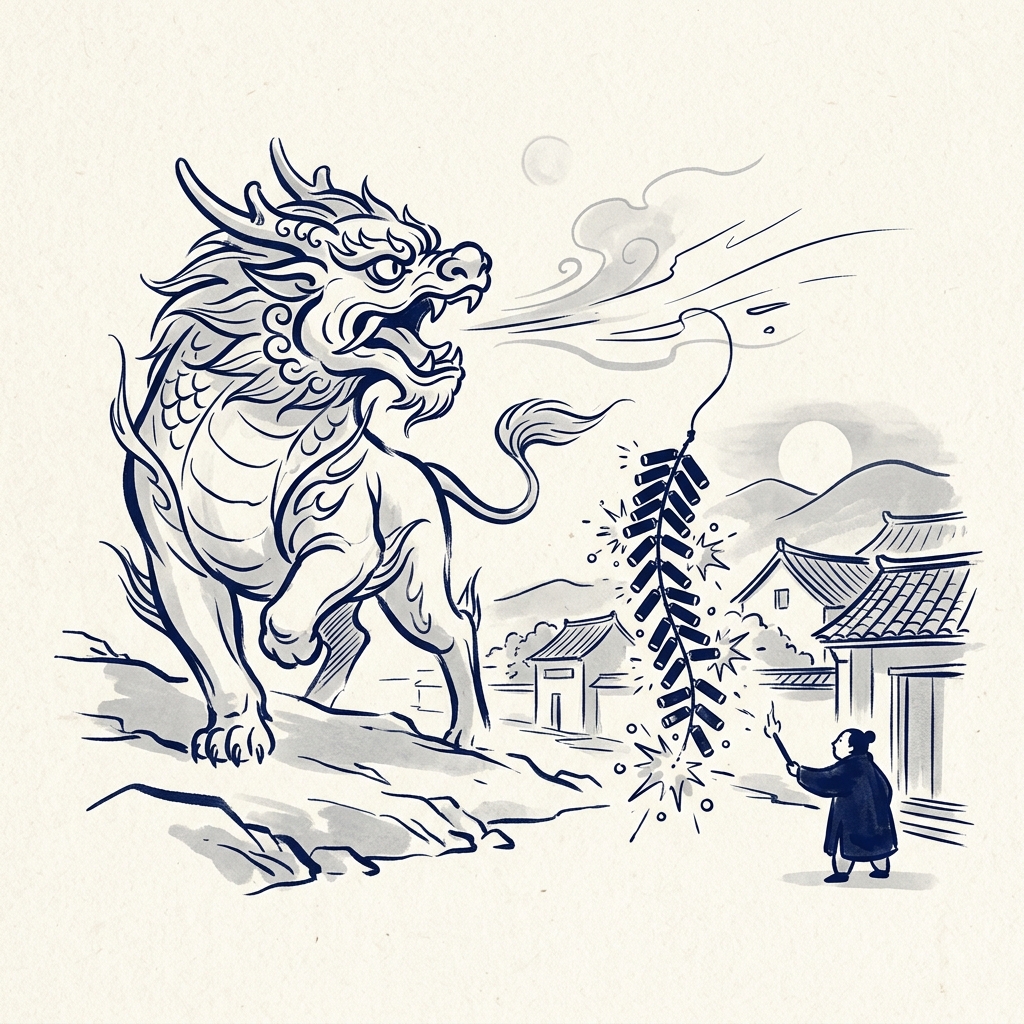
The tradition of lighting firecrackers originates from the legend of the Nian, a mythical beast said to descend upon villages at the beginning of each new year. Villagers discovered that the beast was terrified of loud noises and bright red color.
By burning bamboo stalks, which exploded with a loud crack (the precursor to gunpowder crackers), they successfully warded off the creature. This evolved into the practice of setting off red firecrackers to cast away evil spirits and welcome prosperity.
A Unifying Tradition
Lunar New Year
The most prominent use of fireworks, symbolizing the driving away of bad luck and the ushering in of a prosperous new year. Red firecrackers are a staple at open houses.
Hari Raya Aidilfitri
In Malaysia, the "Bunga Api" (sparklers) and bamboo cannons (Meriam Buluh) have become synonymous with the joy of Hari Raya, particularly for children in the kampungs.
Deepavali
The Festival of Lights is celebrated with sparklers and fountains, illuminating the night to symbolize the victory of light over darkness and good over evil.